

Something bothers me about modern atheism.
Not the skepticism—skepticism can be healthy. Not the questions—questions are how we learn. What bothers me is the unexamined faith that masquerades as rational thinking.
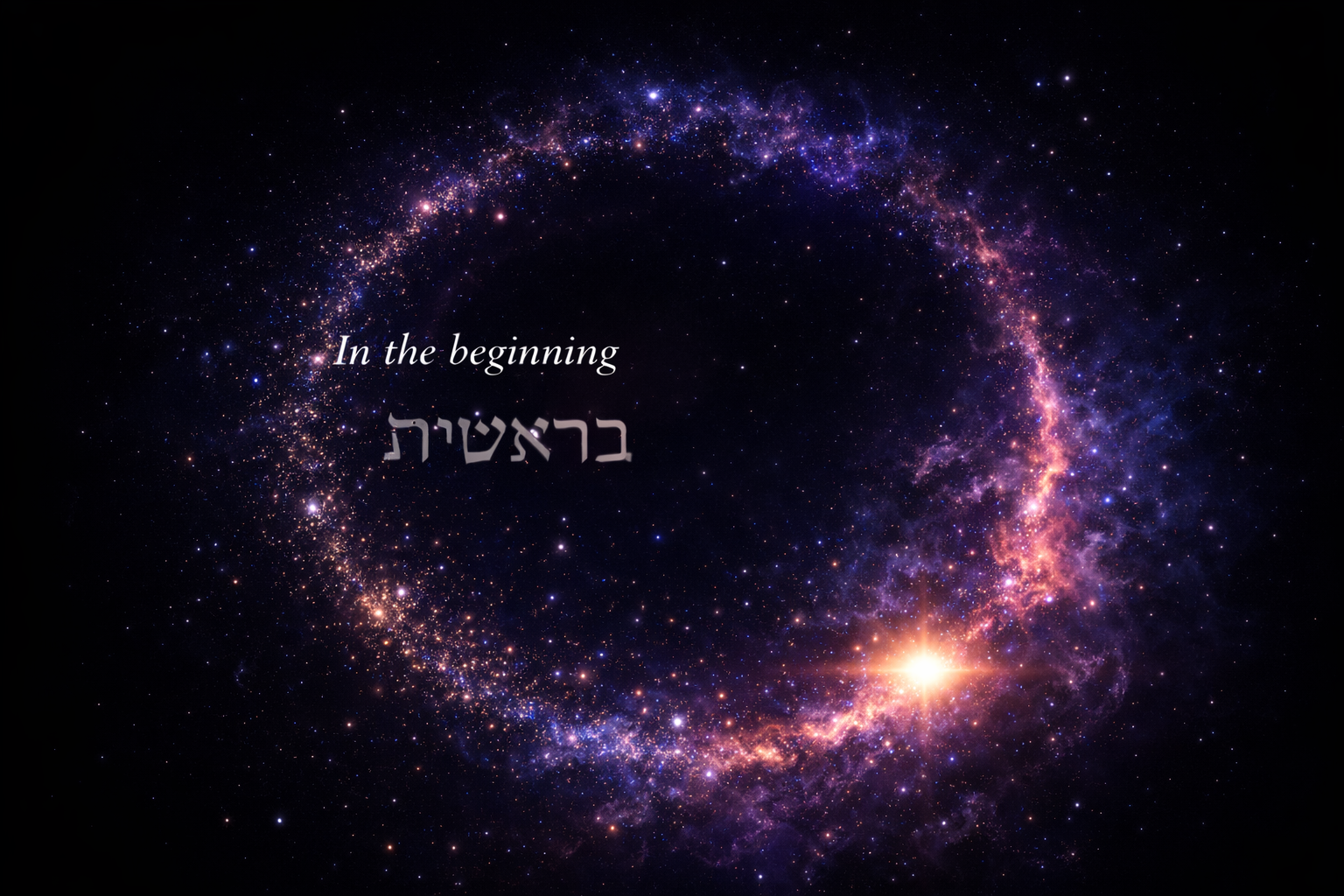
When someone tells you the universe created itself from nothing, they're asking you to believe something far stranger than Genesis 1:1.
Nothing Created Everything? That's the Real Leap of Faith
Walk into any university physics department and ask what caused the Big Bang. You'll get sophisticated answers about quantum fluctuations, cosmic inflation, and spacetime singularities. Press a little harder—what caused those things?—and watch the certainty evaporate.
The Big Bang happened approximately 13.8 billion years ago. The universe exploded from an initial state of impossible density and heat. Fine. But what sparked it? Where did the laws of physics come from that governed that explosion? Why does the universe follow mathematical principles at all?
Allan Sandage spent his career measuring the universe's expansion. This wasn't some pastor with a religious agenda—this was a scientist at the peak of his field. And he said a universe with a beginning "seems to demand a first cause; for who could imagine such an effect without a sufficient cause?"
Yet somehow, suggesting that First Cause might be God gets dismissed as superstition.
Meanwhile, believing that literally nothing became something—that's considered rational.
I'm not buying it.
Why Scientists Have Faith Too (They Just Don't Call It That)
When scientists tell you Earth formed 4.5 billion years ago, they're basing that on radioactive decay rates in rocks and meteorites. They're trusting:
- Machines built by people who occasionally make errors
- Assumptions about starting conditions nobody was around to verify
- Interpretations that require guessing about a past we can't observe
I'm not attacking science. Science is how we figure out how God's creation works. But science has limits. Scientists will openly admit they have no idea what happened before cosmic inflation. They propose dark matter and dark energy—mysterious stuff they've never seen but must exist to make their math work.
That's not certainty. That's educated guessing. Sophisticated faith in a particular worldview.
Which is fine. Just be honest about it.
How to Reconcile Genesis Creation Days with Science
Scientists point at Genesis and laugh. Six days? The universe is 13.8 billion years old. The Earth is 4.5 billion. Clearly the Bible is wrong.
Except they're arguing against something Genesis doesn't actually say.
Look at Genesis 1:1: "In the beginning God created the heavens and the earth." This is the Big Bang moment. The starting gun. Time, space, matter, energy—all of it beginning.
Now look at the "days" that follow. Everyone misses this: Those days aren't measured by Earth's rotation. How could they be? The sun and moon don't show up until day four (Genesis 1:14-19). Before that, there's no "evening and morning" as we know it. No 24-hour solar day exists yet.
So whose days are these? God's.
And God exists outside time. Peter wrote, "With the Lord a day is like a thousand years, and a thousand years are like a day" (2 Peter 3:8). He's not giving you a conversion formula. He's using a figure of speech to show that God isn't trapped in time like we are. The thousand years isn't literal—it's illustrative. Could be a million years. Could be a billion. Time is God's creation, so He's not bound by it.
Understanding the Hebrew Word "Yom" (Day)
The Hebrew word "yom" (day) means different things depending on context. Sometimes it's 24 hours. Sometimes it's daylight hours. Sometimes it's an era. Genesis could be describing epochs, phases, divine creative acts measured in God's timeless perspective.
The point isn't how long. The point is who did it and why. God wasn't rushed. He wasn't experimenting. He spoke, and reality snapped to attention.
Biblical Scientific Accuracy: What the Bible Knew Before Science
The Earth Hangs on Nothing
Job 26:7 says God "hangs the earth on nothing." This was written roughly 3,500 years ago when most cultures thought Earth sat on the back of a giant turtle or rested on pillars. Yet somehow Job nailed it: Earth suspended in empty space.
The Earth Is Round
Isaiah 40:22 talks about "the circle of the earth." The Hebrew word carries the sense of roundness. Written around 700 BC. Long before most people figured out the planet wasn't flat.
The Universe Had a Beginning
Genesis 1:1—"In the beginning God created the heavens and the earth"—is the oldest written claim that the universe had a starting point. Scientists with telescopes recently arrived at the same conclusion. The Bible said it first. By several thousand years.
Innumerable Stars
Jeremiah 33:22 says "the host of heaven cannot be numbered" and compares stars to grains of sand. Before telescopes, you could see maybe 4,000 stars. This sounded like poetic exaggeration. Now we know there are roughly 10²⁶ stars in the observable universe—about the same order of magnitude as sand grains on Earth.
These aren't vague metaphors. They're specific descriptions that align with what we eventually discovered.
How did ancient writers know this?
Biblical Prophecy Fulfilled: Evidence You Can Verify
The Cyrus Prophecy
Isaiah 44:28-45:1 is one of the strangest passages in the Bible.
The prophet Isaiah, writing between 739-681 BC, names a foreign king: Cyrus. He says Cyrus will decree the rebuilding of Jerusalem, command the Temple's foundation be laid, and release Jewish captives from exile.
The problem: Cyrus wasn't born yet. Wouldn't be born for another 150 years.
And yet in 538 BC, King Cyrus of Persia issued a decree letting the Jews return to Jerusalem and rebuild their Temple. Exactly as predicted.
A prophet names a king who doesn't exist, describes what he'll do, and over a century later it happens.
Try explaining that away.
Where Are the Pagan Prophecies?
Meanwhile, where are the prophecies from the gods of Egypt, Philistia, Babylon, Assyria? These were superpowers. Their gods supposedly controlled everything. Yet none of them predicted future events with precision. None of them described the physical universe accurately. None of them demonstrated knowledge beyond their time.
Because they weren't real. They were humanity's attempt to explain what scared or confused us.
The God of the Bible is different. His Word contains knowledge that shouldn't be there. That's not lucky guessing. That's knowing the future because you wrote it.
Why Science Doesn't Threaten Faith in God
Why does the universe follow laws? Why can we predict planetary orbits, chemical reactions, electromagnetic fields? Why is the universe comprehensible to human minds at all?
Natural laws assume a Lawgiver. The consistency we observe—gravity always works the same way, light always travels at the same speed—that's not random. That's design.
Biblical Health Laws Ahead of Their Time
Moses laid out health laws around 1500 BC: quarantine the sick, handle corpses carefully, dispose of waste properly. These practices prevented disease spread thousands of years before anyone knew germs existed.
God gave us brains. We're supposed to use them. Ecclesiastes 3:11 says God "has put eternity in their hearts"—an innate drive to explore, discover, understand His creation.
Scientists discovering antibiotics, engineering technologies, unlocking cosmic mysteries? They're not working against God. They're uncovering what He already made. Catching up to divine wisdom, whether they credit the Source or not.
Every "good and perfect gift is from above" (James 1:17). That includes the discoveries. God gets the glory even when scientists don't acknowledge Him.
Understanding Natural Disasters and God's Sovereignty
When Disaster Strikes, Both Sides Get It Wrong
Atheists say: "If God is good, why do earthquakes kill thousands?"
Religious voices say: "God sent that hurricane because of sin."
Both are wrong.
Genesis 3 doesn't just record humanity's fall. It records creation's fall. When humans sinned, God cursed the ground(Genesis 3:17). The entire created order got subjected to decay and futility (Romans 8:20-22).
What This Means for Natural Disasters
What does that mean practically?
Earth's systems—tectonic plates, weather patterns, biological processes—were set in motion at creation. But they now operate in a broken state. Not the perfection God intended. When Satan gained authority through humanity's surrender, he became "the prince of the power of the air" (Ephesians 2:2), able to mess with natural systems.
When a storm forms, it's usually not God directly causing it. It's the natural consequence of living in a world where physics follows its laws, sometimes with destructive results.
But—and this matters—God can override those laws.
Jesus Calming the Storm
Jesus was crossing the Sea of Galilee when a massive storm hit (Mark 4:35-41). His disciples panicked. Waves crashing over the boat, wind tearing at the sail. They woke Jesus up, terrified they were about to drown.
Jesus stood up and spoke to the storm: "Peace! Be still!"
Instant calm. Not gradual. Not "the storm ran its course." Immediate.
Notice He didn't say, "Father, thanks for this character-building storm." He rebuked it. Treated it like something that shouldn't be happening. And it obeyed Him instantly.
Two truths here:
1. Not every disaster is God's doing 2. God has absolute authority over natural forces
God Redeems Evil for Good
Joseph's brothers sold him into slavery, hoping to destroy him. Years later, after God elevated Joseph to second-in-command of Egypt and positioned him to save his family from famine, Joseph told them: "You intended to harm me, but God intended it for good to accomplish what is now being done, the saving of many lives" (Genesis 50:20).
God doesn't cause all evil. But He's powerful enough to redeem any evil for good purposes.
The Problem of Suffering: Why God Doesn't Stop Every Tragedy
If God is loving and powerful, why doesn't He prevent every tragedy?
Because forced protection isn't love. It's control.
God created humans with genuine free will. We can trust Him or reject Him. Love Him or ignore Him. Follow His ways or choose our own. That freedom is sacred because it's the foundation of real relationship.
If God prevented every consequence of living in a fallen world, He'd eliminate human freedom. We'd be robots, unable to make meaningful choices because God would override every potential danger.
How God Provides in a Fallen World
Instead, God lets the natural world operate according to established laws while:
- Providing resources for healing (plants, herbs, compounds that become medicines)
- Working through people to bring relief
- Offering His presence in suffering
- Promising ultimate restoration when Christ returns
Think about what God built into creation for our benefit. Healing compounds in plants—nearly every modern medicine traces back to something God created. Sleep cycles matching Earth's rotation. Immune systems fighting disease. The human need for community that mobilizes disaster relief.
Even in a broken world, God's fingerprints are everywhere.
God's Character: His Loving Kindness Endures Forever
Psalm 136 repeats one phrase 26 times: "His loving kindness endures forever."
That's who God is. Not a cosmic tyrant hurling lightning bolts. Not a distant watchmaker who wound up the universe and walked away. A Father who never stopped loving humanity even after we rejected Him. Who entered His own creation as Jesus to fix what broke. Who promises to restore everything to original perfection. Who works constantly, using even terrible things for ultimate good.
If you're going through hell right now—illness, loss, fear, uncertainty—God isn't punishing you. He's not indifferent.He's walking with you through it, providing strength you didn't know you had, opening doors you couldn't see, working everything together for your good (Romans 8:28).
The fallen world causes suffering. Satan causes evil. But God brings redemption, restoration, resurrection.
Where All the Evidence Actually Points
The Big Bang? Confirms Genesis 1:1. The universe had a beginning, which demands a Beginner.
Creation days? Measured in God's timeless perspective, describing intentional, ordered creation by an intelligent Mind.
Scientific accuracy in the Bible? Consistently demonstrates knowledge beyond its time.
Fulfilled prophecies? Prove supernatural knowledge of future events impossible for human authors.
Natural disasters? Result from living in a fallen world, not God's judgment.
Science and faith? Not enemies. Science is humanity catching up to what God already made.
The evidence doesn't contradict God. It points straight at Him.
To the Skeptics: An Invitation to Honest Inquiry
I respect your questions. But consider this: Doesn't believing nothing created everything, chaos produced order, randomness generated the DNA code—doesn't that require more faith than believing in an intelligent Creator?
Famous Scientists Who Believed in God
You don't have to turn off your brain to believe in God. Isaac Newton, Johannes Kepler, Robert Boyle, Blaise Pascal, Michael Faraday—brilliant scientists, devout believers. They saw their work as exploring God's creation.
God isn't asking you to ignore evidence. He's asking you to look at all the evidence—including the fingerprints of design everywhere—and follow where it leads.
To the Believers: Stand Firm in Faith and Science
Don't be intimidated by scientific questions. God can handle them. When skeptics challenge you about the Big Bang or Earth's age, don't retreat. Engage. Show them how honest examination of evidence supports rather than contradicts a Creator.
When tragedy strikes—disasters, suffering, loss—don't blame God or question His goodness. We live in a fallen world groaning for redemption (Romans 8:22). The same God who spoke the universe into existence, who called Cyrus by name 150 years before his birth, who calmed storms—He's powerful enough to work all things, even painful things, for your ultimate good.
His loving kindness endures forever.
Recommended Resources for Further Study
Books on Science and Faith:
- The Case for a Creator by Lee Strobel (scientific evidence for intelligent design)
- Evidence That Demands a Verdict by Josh McDowell (biblical prophecy and historical accuracy)
- The Problem of Pain by C.S. Lewis (understanding suffering and God's goodness)
- The Genesis Question by Hugh Ross (reconciling Genesis with modern cosmology)
Online Resources:
- Reasons to Believe (reasons.org) - Science-faith integration
- BioLogos (biologos.org) - Christian perspectives on evolution
- Discovery Institute (discovery.org) - Intelligent design research
The journey from skepticism to faith starts with honest questions. Keep asking them.
The answers point to God.
Join the Conversation
If this changed how you see science and faith, share it with someone wrestling with these questions. Follow The Open Gospels for more evidence-based explorations of faith, science, and the Bible.
Subscribe below to get in-depth articles on faith and reason delivered to your inbox.
Science doesn't contradict God—it reveals Him.